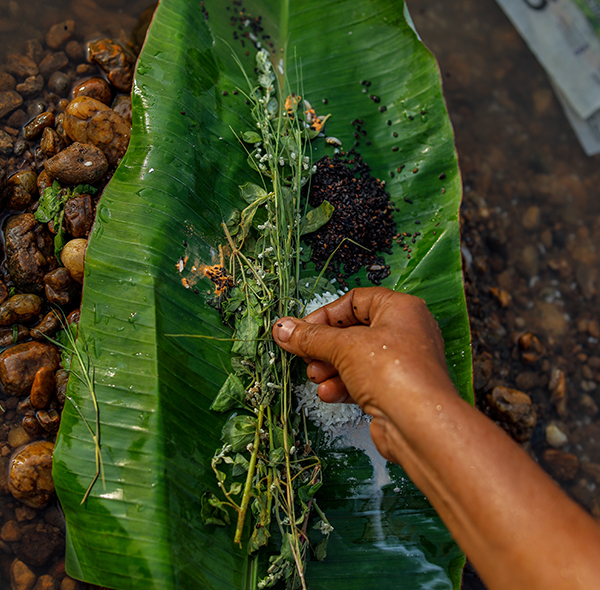
Ivormadom Posthumous Services
Ivar madom is the leading Posthumous service provider in Kerala. Hinduism, the belief that a soul takes birth again, and dies in another body, that is reincarnation. The customs and rites followed at Hindu funeral service are rooted to the theory of reincarnation. Although Hinduism is one of the third largest religion, you may find it difficult to seek out details about the customs and practices of a Hindu Antyeshti (funeral service). Ivarmadam provide respectful, professional, timely and most culturally appropriate posthumous services to all the families across Kerala. Our mission is to offer a smooth process for the families by acting on professional values, sensitive and traditional approach. Our Ivarmadam contact number can be contacted by the families at any time across the state.
Ivor madam Cremating the deceaseds body is a common method of disposition. Hindus show very little respect for the human body. They believe that the physical body could prevent the soul from proceeding on the rest of its path. The body is then disposed of as soon as possible by the deceaseds family. In a Hindu burial, Ivar madam cremation occurs so as to break the attachment of the soul to the body which it is leaving behind so that it may proceed towards mukti (release from death and the cycle of rebirth). Ivar Madom Contact Number : +91 94462 95160
Unmarried children, infants and saint are typically not cremated by Hindus as they are considered not attached to the body/pure. They can also be buried. Antyeshti (Hindu Funeral rites) follows a standard form however slight differences may be found across different groups and sect.
In the case of predicted death: Make sure a priest has been called and is on his way or is in the process of helping the situation in the correct way.Liaise with medical staff to ensure procedures are carried out if the patient is on hospital premises.
Prokshana
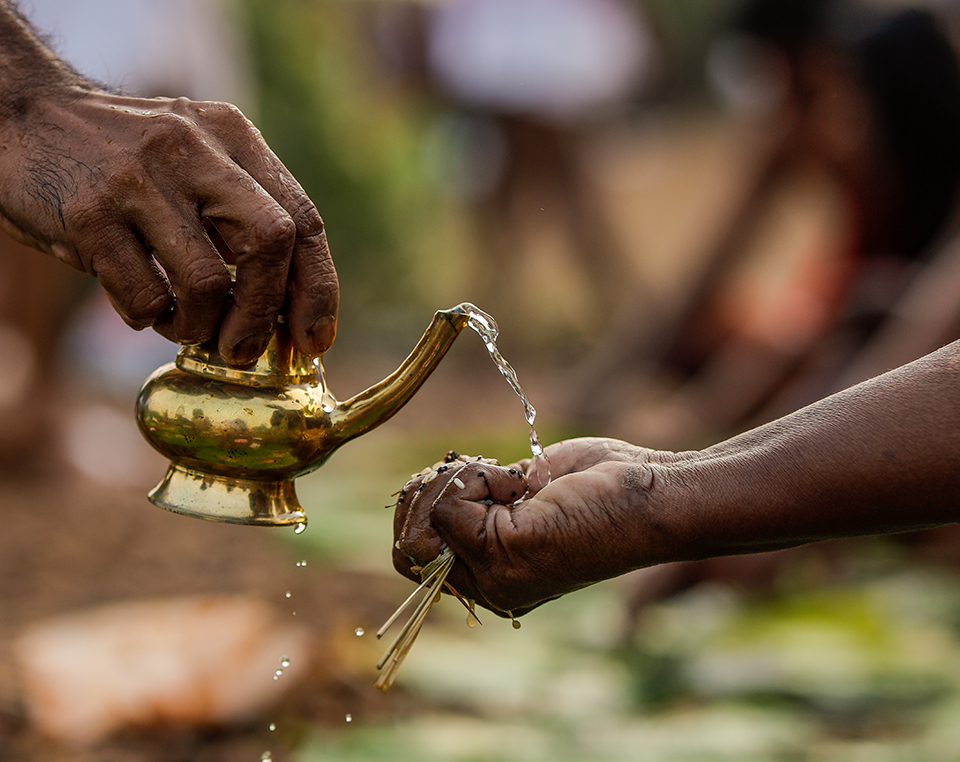
The individual needs to be sprinkled with sacred ganga water from the Ganges River or poured into the mouth, or both. Recite divine names while offering the water: Ram, Krishna, Shiva etc. Instead of ganga water, purified water may be used if Ganga water is unavailable.
Hare Rama Hare Rama Rama Rama Hare Hare Hare Krishna Hare Krishna Krishna Krishna Hare Hare Shiva Shiva Shiva Shiva Shivaya Nama Om Hara Hara Hara Hara Haraya Nama Om Om Namo Narayanaya ! Om Namo Narayanaya !
Viewing / Wake
It is customary for many families to have a short wake before the cremation service. A wake usually takes place in a member of the family's house but it can be held in the funeral parlor or crematorium. Mourners gather around the coffin at the wake and often sing hymns or chant mantras. When the wake is over, the coffin is carried out feet first to the crematorium.
Cremation & Ceremony (MukhAgni)
The cremation must occur as quickly as possible, ideally between 24 and 48 hours after the death. During the ceremony, a selected family member gives the Kartaa—the person carrying out the rites—powers. The timing of cremation should fall between sunrise and sunset.
A Hindu priest is frequently the officiant and handles all Hindu funeral procedures, guiding the family and other mourners in the numerous rituals. Chanting, prayer, and singing are all done during the event. Sometimes flowers or rice balls (pind daan) are placed.Usually a day or two after the cremation, the crematoriums give the cremated remains (asti). Transfer the ashes to an environmentally safe container that dissolves in water. The container must be transported with care and kept in a secure area.
Immersion of Ashes (Asti Visarjan)
Some families wish to take ashes to immerse in the Holy Ganga, sometimes at pilgrimage centers such as Haridwar. It is advised that ashes should be immersed as soon as possible after death, preferably before the tenth day. The individual who performed the cremation should ideally perform the immersion. A close friend or relative can also carry out this rite.